
Cranial Fluid Leak Special Content From Creators #791
Open Now cranial fluid leak premium online video. Completely free on our viewing hub. Get lost in in a ocean of videos of content highlighted in excellent clarity, designed for exclusive streaming fanatics. With hot new media, you’ll always receive updates. Encounter cranial fluid leak expertly chosen streaming in amazing clarity for a absolutely mesmerizing adventure. Enter our media world today to stream select high-quality media with no payment needed, no credit card needed. Enjoy regular updates and discover a universe of uncommon filmmaker media optimized for top-tier media fans. Take this opportunity to view distinctive content—instant download available! Witness the ultimate cranial fluid leak one-of-a-kind creator videos with rich colors and select recommendations.
A cranial csf leak occurs in the skull, and often causes symptoms such as clear fluid leaking from the nose or ear Csf leak may also be spontaneous, due to intracranial tumors, idiopathic intracranial hypertension (iih), or congenital skull defects. Some csf leaks may heal with bed rest and other conservative treatment.
CSF leak (Cerebrospinal fluid leak): Causes, Risk Factors, Symptoms
A cerebrospinal fluid (csf) leak happens when a tear in the membrane around your brain or spinal cord lets fluid escape The most common causes of cranial csf leaks are craniofacial trauma and intracranial surgical procedures Cranial leaks can cause headaches and nasal drainage
Spinal leaks may lead to headaches, neck stiffness or back pain
A healthcare provider can diagnose and treat it. About cranial csf leaks cerebrospinal fluid (csf) is a watery fluid that protects, nourishes, and removes waste from the brain and spinal cord When an area of the skull is damaged, becomes thin, or cracks, the dura (the tissue that holds cerebrospinal fluid and surrounds the brain and spine) is exposed and can easily tear. A runny nose can sometimes turn out to be a more serious condition known as a cerebrospinal fluid (csf) leak
Also known as csf rhinorrhea, this is a condition in which a fluid (called cerebrospinal fluid) escapes through a tear in the membrane surrounding the brain and leaks into a nasal passage. A leak that occurs at the cranial level, rather than the spine, doesn't result in the same drop in volume and pressure of fluid in the skull A cranial csf leak results in a runny nose and carries a high risk of meningitis, an inflammation of the membrane around the brain and spinal cord, which can be fatal and requires emergency attention. Cerebrospinal fluid (csf) is a watery fluid that continually circulates through the brain's ventricles (hollow cavities) and around the surface of the brain and spinal cord

A csf leak occurs when the csf escapes through a tear or hole in the dura, the outermost layer of the meninges.
A cranial csf leak happens when the fluid leaks from the brain, often due to things such as a skull fracture If the leak occurs at any point along the spinal cord, it's called a spinal csf leak. Cerebrospinal fluid leaks are classified into two distinct disorders Cranial leaks, and spinal leaks
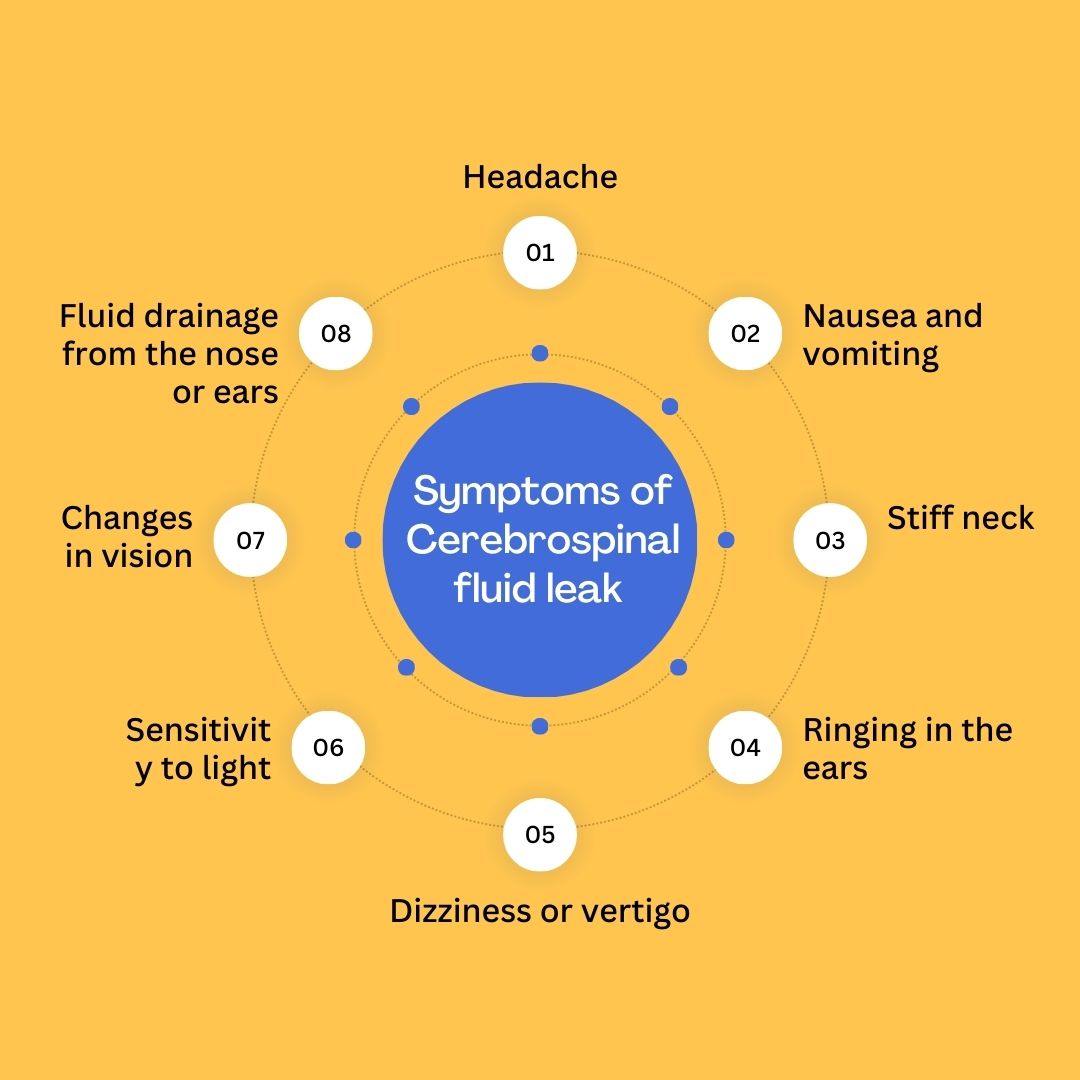
[10][11] where there has been no preceding surgery or medical procedure that may have caused a csf leak it is called a spontaneous csf leak (scsf leak) The symptoms of a csf leak will vary depending on the location of the leak In patients with a cerebrospinal fluid leak within the head, symptoms include Runny nose (clear liquid) headache hearing loss pulsatile tinnitus dizziness/vertigo clear fluid discharge from ears fevers, chills, sensitivity to light, and neck stiffness (symptoms of.
Extradural csf leakage may also lead to neurologic symptoms from changes in intracranial volume and pressure